
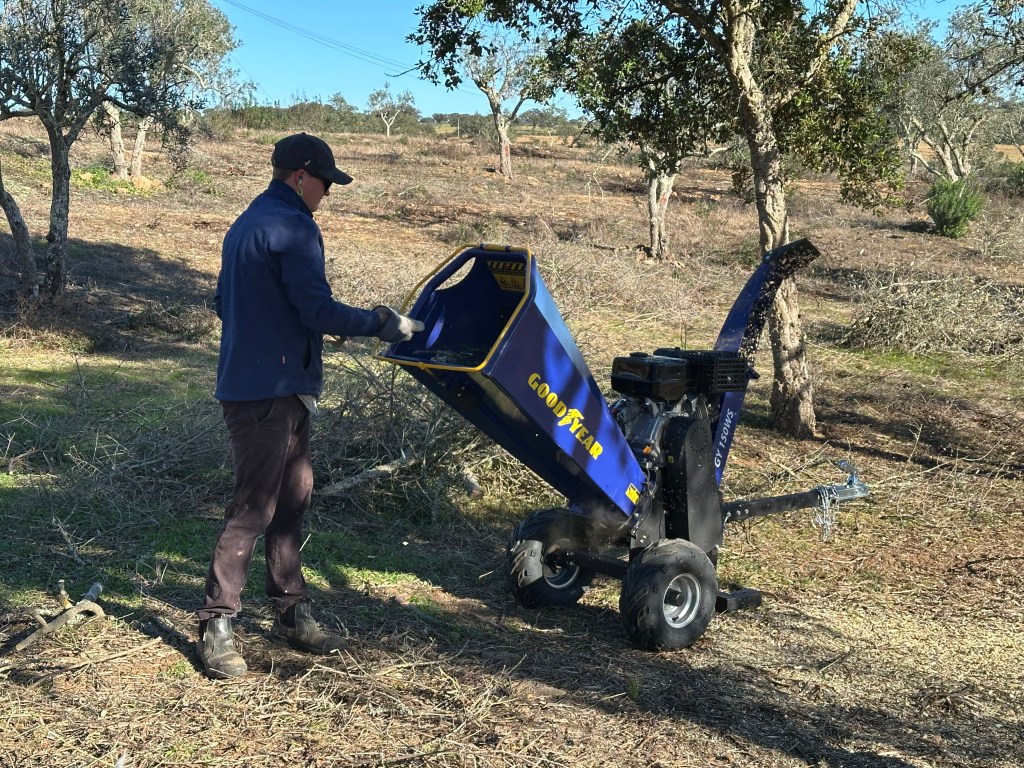
At G-Agri, our commitment to circular farming drives every decision we make. We believe in making the most of every resource while minimizing waste and environmental impact. During this year’s olive harvest, we faced the common task of pruning and cutting back branches from our olive trees to maintain their health and productivity. Instead of letting these branches go to waste—or worse, burning them—we embraced a more sustainable solution: turning them into wood chips.
This practice not only aligns with our no-waste philosophy but also provides numerous benefits for our farm, the soil, and the environment. Let’s explore why we chose this method and how it contributes to our mission of sustainable farming.
Why We Don’t Burn Branches
In many farming communities, burning pruned branches is a traditional method of disposal. While it may seem like a quick solution, burning comes with significant risks and drawbacks:
- Wildfire Risk: In regions like Alentejo, where dry conditions are common, burning piles of branches can pose a serious risk of wildfires. At G-Agri, we prioritize safety and avoid practices that could endanger the land or surrounding areas.
- Environmental Impact: Burning branches releases carbon dioxide and other pollutants into the atmosphere, contributing to air pollution and climate change. As stewards of the environment, we strive to reduce our carbon footprint, not add to it.
- Loss of Valuable Organic Material: When branches are burned, the nutrients and organic matter they contain are lost. By choosing to repurpose them, we retain their value and contribute to the health of our farm.
The Benefits of Turning Branches into Wood Chips
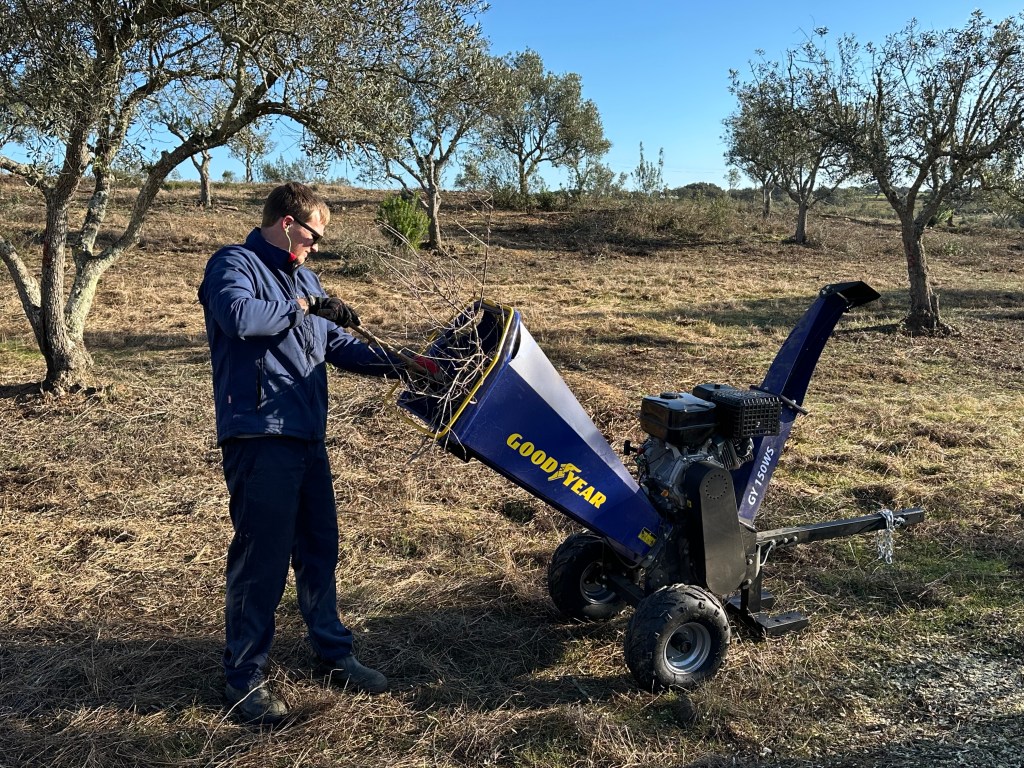
Instead of burning, we use a special wood-chipping machine to transform the pruned branches into wood chips. This process is not only eco-friendly but also offers multiple benefits for our farm:
1. Mulching Around Olive Trees
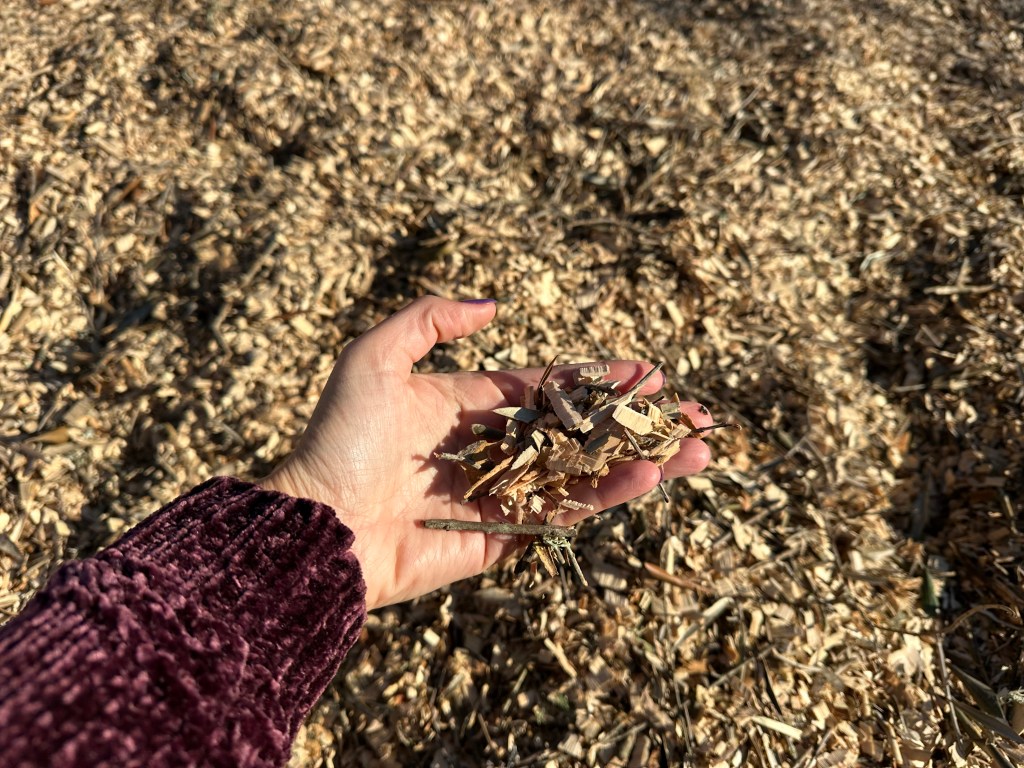
One of the primary uses for the wood chips is as mulch around the base of our olive trees. This layer of organic material provides several advantages:
- Moisture Retention: Mulch helps retain soil moisture by reducing evaporation, ensuring the trees have access to water for longer periods, especially during dry spells.
- Weed Suppression: By covering the soil, the wood chips act as a natural barrier, reducing weed growth and minimizing competition for nutrients.
- Temperature Regulation: Mulch insulates the soil, keeping it cooler in the summer and warmer in the winter, creating a more stable environment for the tree roots.
2. Enhancing Soil Health
As the wood chips decompose, they add valuable organic matter to the soil. This improves soil structure, enhances nutrient availability, and supports the growth of beneficial microorganisms. Over time, the result is healthier, more fertile soil that contributes to the overall productivity of our farm.
3. Erosion Control
In areas prone to soil erosion, spreading wood chips can help stabilize the ground. The chips reduce the impact of heavy rain and wind, protecting the topsoil and preventing valuable nutrients from being washed away.
4. Creating Compost and Fertilizer
Wood chips can also be incorporated into our composting system, combining them with animal waste and other organic materials. This process produces a rich, natural fertilizer that can be used across the farm, further closing the loop in our circular farming system.
5. Reducing Waste
By turning branches into wood chips, we significantly reduce waste on the farm. Every branch is repurposed, ensuring that nothing goes unused or discarded.
Why Wood Chipping Is Better Than Burning
The decision to chip rather than burn branches goes beyond safety—it’s about making choices that benefit the farm and the planet. Here’s why wood chipping is the superior option:
- Environmental Responsibility: Chipping eliminates the release of harmful pollutants into the atmosphere, reducing our carbon footprint and contributing to cleaner air.
- Resource Conservation: Wood chips retain the organic value of the branches, allowing us to return nutrients to the soil rather than losing them to ash.
- Farm Sustainability: Repurposing branches as wood chips supports a sustainable farming cycle, where every resource is utilized to its fullest potential.
Circular Farming in Action
At G-Agri, circular farming means finding innovative ways to repurpose resources and reduce waste. By turning olive branches into wood chips, we’re not just managing pruning waste—we’re actively improving the health of our soil, supporting our crops, and reducing environmental risks.
This practice is a testament to the power of sustainable farming. It demonstrates how thoughtful choices can benefit the land, the environment, and the overall productivity of the farm. As we continue to grow, we’re committed to finding even more ways to make the most of what nature provides while giving back to the earth in every way possible.
#SustainableFarming #CircularFarming #NoWaste #OliveHarvest #GAgriLife 🌿🫒🌾
 G-Agri
Leave a comment